


Carbon Fiber vs Fiberglass Pickleball Paddle: How Face Material Changes Your Buying Decision

Carbon fiber and fiberglass are face-material labels, not complete-paddle categories. The useful buying decision starts with the surface, then brings in the core, thickness, shape, weight and grip. That order keeps a material comparison connected to the shots you actually play.
Start with the face, then keep reading
The face is the outer hitting surface. A listing that says carbon fiber or fiberglass is naming that one part of the paddle. It is a helpful first filter for a shopper comparing materials, but it does not replace the rest of the product page.
That is why two paddles carrying the same face label can still be different choices. Their stated core construction, nominal thickness, shape, mass and handle all belong in the comparison. The current USA Pickleball approved-equipment list also organizes sanctioned equipment by exact manufacturer and model, rather than by face material alone.
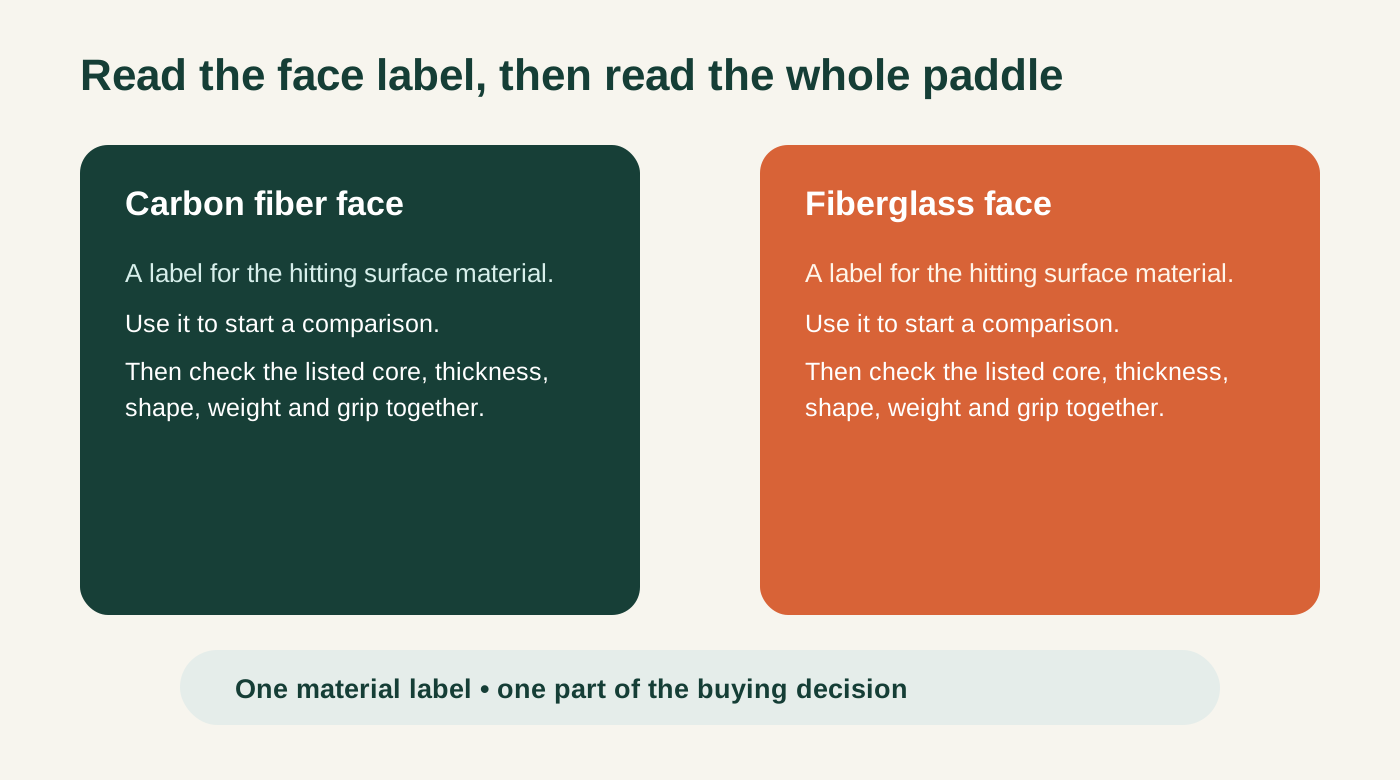
A buying table that keeps the comparison useful
| When you see this on a listing | What it tells you | What to read next |
|---|---|---|
| Carbon fiber face | The listed hitting surface uses carbon fiber. | Core, nominal thickness, shape, weight and grip. |
| Fiberglass face | The listed hitting surface uses fiberglass. | Core, nominal thickness, shape, weight and grip. |
| “Hybrid” in a product name | It is a product-family or shape label, not a substitute for the face and core specifications. | The configuration selected on that live page. |
| One “best material” claim | A reason to pause and compare the complete build. | Your usual shots, on your usual court. |
Several comparison guides, including JOOLA’s face-material overview, introduce the two surface labels. The practical next step is to put each label back into its complete listed construction. For a companion look at the inside of a paddle, see our full-foam vs honeycomb guide.

Current Dinkly examples: read the listed construction
Dinkly’s current product pages give two clear examples of why the full listing matters. Play is listed with a fiberglass surface and a 16 mm polypropylene honeycomb core. Fusion is listed with a raw carbon fiber face and a 16 mm build. Those are product-page facts, not a shortcut to a playing verdict.
| Current Dinkly listing | Listed face material | Listed build detail to keep alongside it | Next step |
|---|---|---|---|
| Dinkly Play | Fiberglass surface | 16 mm polypropylene honeycomb core | Read the live listing and compare it with your everyday needs. |
| Dinkly Fusion | Raw carbon fiber face | 16 mm build; choose the live product configuration. | Compare the selected Fusion setup with the rest of its listed specifications. |


If your decision is also about model family, the Dinkly Play vs Dinkly Fusion comparison and the Hybrid vs Elongated guide give the next two decision paths.
Use a four-step court check before you buy
Once two complete listings are on your short list, keep the comparison simple. Use the same ball and familiar court conditions. The aim is not to award a universal winner; it is to identify which complete setup is easier for you to repeat.
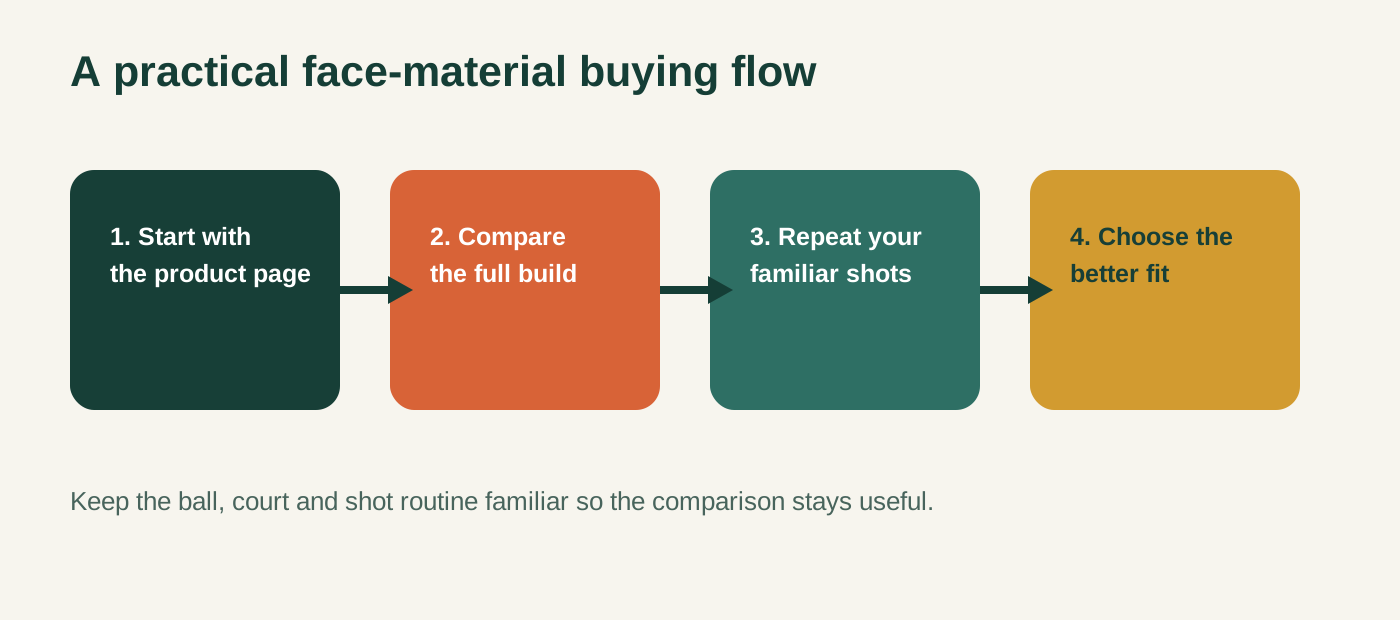
- Read both product pages. Note face, core, nominal thickness, shape, weight and grip.
- Pick four familiar dinks. Do not change your target or stroke just to suit a label.
- Add four blocks, four drives and four returns. Keep the ball and court conditions steady.
- Choose the clearer fit. The best short-list option is the one whose complete setup you can repeat with confidence in your regular games.
For a separate decision based on court scenarios, use our power vs control vs all-court decision tree. For an additional material explainer, see this carbon-fiber and fiberglass overview.
Frequently asked questions
What is the difference between carbon fiber and fiberglass pickleball paddles?
Carbon fiber and fiberglass identify the material used in a paddle’s hitting face. They are useful starting labels, but the complete paddle also includes its core, thickness, shape, weight and grip.
Is carbon fiber or fiberglass better?
Neither face label is a universal answer. Compare complete paddle listings and repeat familiar dinks, blocks, drives and returns before deciding which setup is easier to use in your regular games.
Which face materials do Dinkly paddles list?
Dinkly currently lists a fiberglass surface for Play and a raw carbon fiber face for Fusion. Check the live product page for the configuration you are considering before purchase.
How should I compare two pickleball paddle faces?
Hold the ball, court and shots steady. Read the full specification for both paddles, then repeat a short sequence of familiar dinks, blocks, drives and returns to decide which full build fits your game.
Product information checked on September 24, 2026: Dinkly Play and Dinkly Fusion live product pages. Further reading: JOOLA, USA Pickleball approved equipment, and USA Pickleball equipment news.
Leave a comment