

Power vs Control vs All-Court Pickleball Paddle: A Court-Scenario Decision Tree

“Power,” “control” and “all-court” become useful only when you connect them to shots you actually play. Start with your recurring situation: clean drives that stop short, soft resets that carry long, or a game that asks for both attacks and touch. Then compare paddles with the same ball, target and swing effort. The result is a choice grounded in your court, not just a label on a product page.
The three playing goals
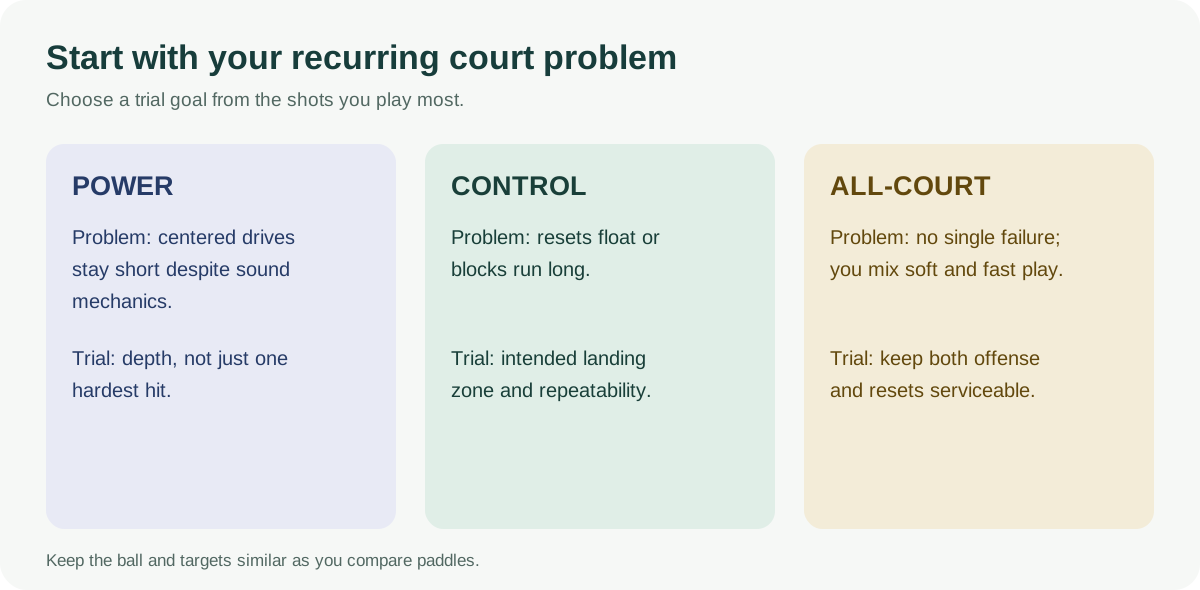
Power is useful pace and depth on the attacking shots you can hit cleanly. Control is the placement and touch you can repeat on drops, dinks and blocks. All-court means you want a comfortable balance across the baseline, transition zone and kitchen. Most players use all three kinds of shots; the useful question is which one needs the most attention in your next paddle comparison.
If you are often late to the ball, first look at ready position and how comfortably you move the paddle into place. Once contact is steady, a side-by-side paddle trial becomes much easier to interpret.

Match a goal to a court scenario
Pick the situation you recognize most often. Use the final column as the observation to carry into a court trial, whether you are comparing paddles you already own or trying a new shape.
| What happens on court? | Check first | Explore | Watch for |
|---|---|---|---|
| Well-struck drives land short | Centered contact and steady swing effort | Useful pace and depth | Deeper landings in your chosen target zone |
| Resets and blocks travel long | Face angle and contact point | Touch and placement | More repeatable soft landings |
| You attack and reset in the same rally | Which shot is hardest to repeat? | All-court balance | Comfort across both fast and soft shots |
| You are late in quick kitchen exchanges | Ready position and grip comfort | Easy face positioning | Being ready for the next volley |
Follow the decision tree
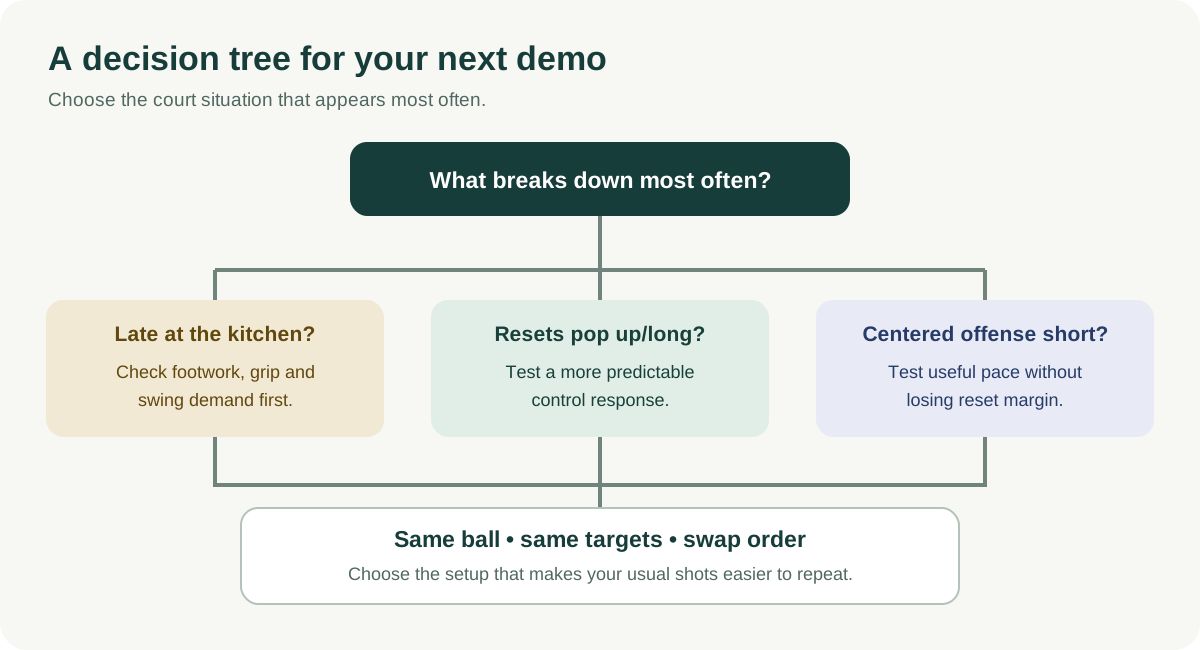
Start with your recurring miss. For short drives, check contact and timing before looking for more pace. For long resets, check face angle before exploring more touch. If your game needs both, try a balanced setup and make sure neither your attack nor your soft game feels awkward. The aim is to compare paddles against the same job, not to make one paddle win every imaginable category.

Compare Dinkly options with your goal in mind
Dinkly Play has a 16 mm polypropylene honeycomb core and fiberglass face. Dinkly Fusion has a 16 mm EPP/EVA foam core and T700 raw-carbon face. Fusion Hybrid lists a 7.5-inch face and 4.125-inch grip; Elongated lists a 7.32-inch face and 4.25-inch grip with a longer handle. Those concrete choices give you a useful shortlist for the court scenario you picked above.
To compare them, use six controlled drives toward a deep target, six soft drops or resets toward the kitchen, six blocks and six quick exchanges with each paddle. Keep the same ball and partner. Note which setup feels comfortable through both your priority shot and the rest of your game. If shape is your main question, continue with our Fusion Hybrid vs Elongated guide.

Power, control and all-court FAQ
How do I choose between power, control and all-court?
Name the shot you want to improve. Short, clean drives point toward a pace-focused trial; long soft shots point toward placement and touch; a mix of attacks and resets points toward an all-court trial.
What should I compare before choosing a paddle style?
Keep the ball, court, target and swing effort similar with each paddle. Compare the depth of your drives, the landing zone of your resets and how comfortably you handle quick volleys.
Where do Dinkly Play and Fusion fit?
Dinkly Play has a fiberglass face and honeycomb core. Fusion has a foam core, raw-carbon face and two shapes. Use those construction and shape choices to select a paddle to try for your preferred shots.
What if I am late at the kitchen line?
Start with ready position, preparation and handle comfort. In a paddle trial, focus on how easily you present the face for several quick volleys, not just one hard hit.
A clear next step
Pick one court scenario, then compare Play and the Fusion shapes by grip, construction and repeatable shots. The paddle that best supports your usual game is the one worth taking into the next session.
Leave a comment