


What Is a Dink in Pickleball? Rules, Technique & Beginner Tips

image source:https://pickleland.com/how-to-dink-in-pickleball/?srsltid=AU7gw4WC851tgcX0l6bBueeQtrcPJTDzNXPDBKBLjwW2Om7x8r6Ek9yh
A dink is the soft, controlled shot that arcs barely over the net and drops squarely into your opponent’s kitchen (non-volley zone). If you are new to the game, understanding what is a dink in pickleball is the single biggest turning point in your progression. It transforms pickleball from a frantic tennis-style baseline slugfest into a tactical game of patience, court positioning, and forced errors. This no-fluff guide breaks down official kitchen rules, proper dinking mechanics, shot variations, and battle-tested strategies to control rallies and win more points.
1. What Is a Dink in Pickleball? (Clear Definition)
Core Definition: A dink is a soft, controlled shot hit from near the Non-Volley Zone (kitchen line) that clears the net with low clearance and lands inside the opponent's kitchen, forcing them to hit upward.
The Three Key Elements of a Dink
1. Low Net Clearance: A good dink skims 1 to 3 inches above the net cord, giving opponents zero downward attacking angle.
2. Kitchen Landing: The ball must land inside the 7-foot Non-Volley Zone (NVZ) or on its boundary line.
3. Unattackable Trajectory: Because the ball bounces low below net level, opponents cannot smash it out of the air—they must lift it defensively.
Why the Dink Matters So Much
Power hits (drives) win points against pure novices, but intermediate and advanced players eat fast balls for breakfast. Dinking resets frantic points, neutralizes aggressive hard-hitters, and buys you time to establish dominant net positioning. In pickleball, you don't win points by hitting hard; you win by forcing your opponent to hit upward.
2. The Kitchen (Non-Volley Zone) Explained
The dink only exists because of pickleball's most famous rule: the Non-Volley Zone (NVZ), universally called the Kitchen.
Kitchen Rules That Make the Dink Work
No Volleys Inside: Players cannot strike the ball out of the air (volley) while standing in or touching the 7-foot kitchen area or its boundary lines.
The Forced Lift: When a dink lands in the kitchen, your opponent must let it bounce before hitting it. Since the ball bounces below net height, they are physically incapable of smashing downward.
Momentum Counts: If a player hits a volley outside the kitchen but momentum carries their feet or paddle onto the line, it is a fault.
Dink vs. Drop Shot: What's the Difference?
Drop Shot: Hit from the baseline or transition area (often the 3rd shot of a rally) into the kitchen.
Dink: Hit when both players are already standing up at the kitchen line. Both shots aim for the same landing zone, but a dink is played from point-blank range.
3. Types of Pickleball Dinks
Mastering dinking requires variety to keep opponents off-balance:
Forehand Dink: The bedrock of dinking. Played with a compact lifting motion from your dominant side. Offers the highest consistency.
Backhand Dink: Hit across your body with quiet wrist mechanics. Crucial for neutralizing attacks aimed at your dominant hip.
Slice (Backspin) Dink: Carried out with a gentle high-to-low brush underneath the ball. Creates backspin that causes the ball to skid and stay extra low off the bounce.
Topspin Dink: Brushed low-to-high across the back of the ball. Makes the ball dip quickly over the net and jump forward aggressively into the opponent’s feet.
Dead vs. Pressurized Dink: A 'dead dink' has no pace, spin, or purpose, making it easy to attack. A 'pressurized dink' is placed with intent—targeting feet, backhands, or sharp sideline angles.

4. How to Hit a Dink in Pickleball
Golden Rule: Think of the dink swing as a gentle underhand push with your shoulder—never a wrist snap or arm swing.
Position & Stance
Stand 2 to 3 inches behind the kitchen line—never directly on it. Keep your knees bent in an athletic ready position with your chest tall, weight on the balls of your feet, and paddle up in front of your chest.
Grip & Contact
Grip Pressure (3/10): Use a relaxed Continental or Eastern grip. On a scale of 1 to 10, your grip pressure should hover around a 3 or 4. A tight grip produces a trampoline effect that pops the ball up into an attackable zone.
Contact Point: Make contact well in front of your body at the peak of the bounce.
Swing Mechanics
Quiet Wrist: Lock your wrist firm and quiet. Eliminate all snapping.
Shoulder Push: Initiate the shot from your shoulder and knees, gently lifting upward through the ball.
Compact Finish: Keep your follow-through short and controlled, stopping around chest height.

Where to Aim Your Dinks
Avoid hitting to the center of the kitchen. Instead, target:
The Opponent's Backhand: Forces awkward reach and defensive lifts.
Sharp Cross-Court Angles: Pulls them off-court and creates wide gaps down the middle.
Directly at Their Shoes: Forces them to hit from an awkward half-volley position.
5. When to Use a Dink in a Rally
The Third-Shot Drop
After the serve and return, the serving team frequently uses a drop into the kitchen to neutralize the receiving team's net advantage, allowing both servers to safely advance to the kitchen line.
Returning a Dink (Dink Battles)
Once all players reach the kitchen line, a 'dink battle' begins. The goal is simple: stay patient, hit repeatable unattackable dinks, and wait until the opponent pops one up high enough to put away with a volley smash.
Against Power Players (Bangers)
If your opponents love blasting baseline drives, stop trading hard shots. Block or drop the ball softly into their kitchen. This strips away their driving power and forces them into uncomfortable soft play.
Cross-Court vs. Straight-Ahead Dinks
Cross-court dinks travel over the lowest part of the net (34 inches at center vs. 36 at sidelines) and give you 7 extra feet of court margin. Straight-ahead dinks give opponents less reaction time, but carry higher risk of clipping the net.
6. Common Dinking Mistakes to Avoid
1. Death Grip: Gripping too tightly causes erratic bounces and high pop-ups.
2. Big Backswings: Taking a huge tennis-style backswing ruins timing and control at the NVZ.
3. Flicking the Wrist: Flicking the wrist creates uncontrollable vertical pop-ups.
4. Creeping on the Line: Standing on the kitchen line invites foot faults. Keep a 2-inch cushion.
5. Impatience: Trying to smash an unattackable low ball into the net. Wait for your pitch!
7. How to Practice Your Dinks
Cross-Court Cooperative Drill: Stand diagonally across the net at the kitchen line with a partner and maintain a continuous 50-shot dink rally without hitting into the net or popping the ball above chest height.
Reset & Absorb Drill: Have a partner blast drives at you while you stand at the kitchen. Focus entirely on soft, absorbing blocks into the kitchen.
Solo Wall Drill: Practice dinking against a garage door or gym wall with tape marked at 34 inches.
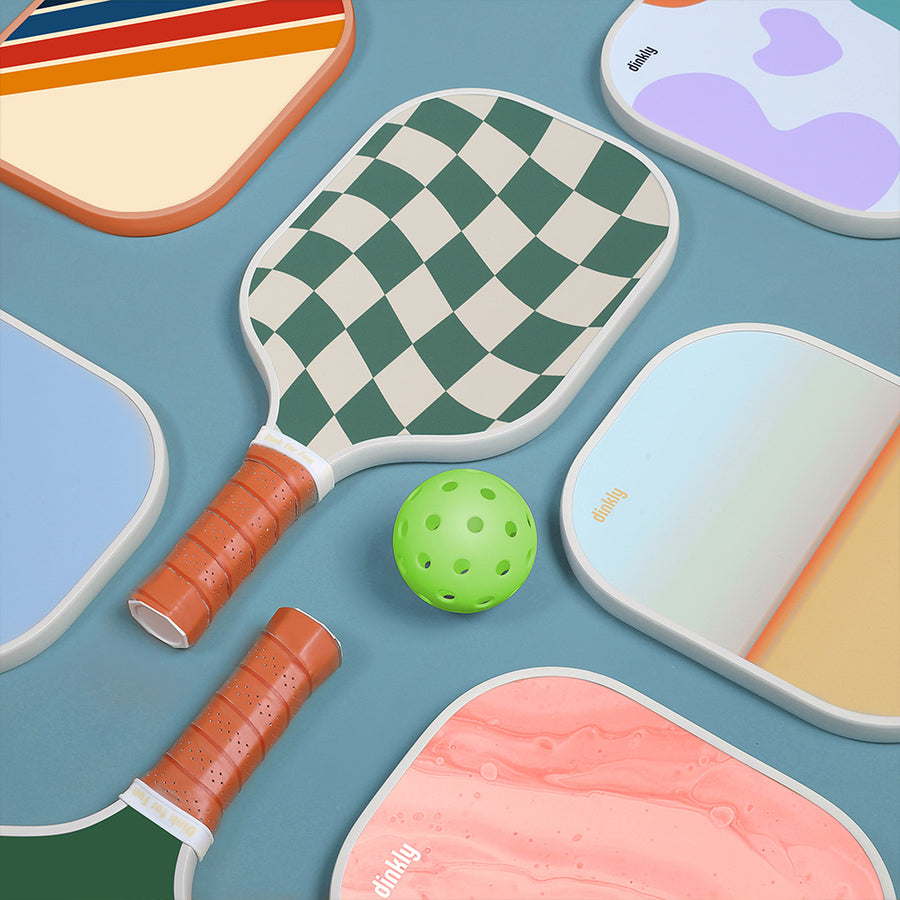
Gear Tip for Developing Dinking Touch:Control at the kitchen line begins with the right paddle. Heavy, power-focused paddles slow down your hand speed and produce unpredictable pop-ups. The Dinkly Beginner Pickleball Paddles Series features a balanced swing weight, responsive honeycomb core, and a forgiving sweet spot engineered specifically to give developing players unmatched touch and soft-game control.
Explore paddle specifications in our Complete Pickleball Paddle Buying Guide and brush up on kitchen regulations in our Pickleball Dinking & Kitchen Rules Article.
8. Frequently Asked Questions (FAQ)
Q1: Is a dink an offensive or defensive shot?
It is both. Defensively, it resets chaotic points and neutralizes hard drives. Offensively, a sharply angled dink pulls opponents out of position, forcing weak pop-ups for easy put-away smashes.
Q2: What's the difference between a dink and a drop shot?
A dink is hit when you are already stationed at the kitchen line. A drop shot is hit from deep in the court (baseline or transition zone) into the opponent's kitchen.
Q3: Can you dink from anywhere on the court?
Technically, any soft unattackable shot landing in the kitchen fits the philosophy, but official pickleball terminology reserves 'dink' for shots struck from near the Non-Volley Zone line.
Q4: What is a dead dink in pickleball?
A dead dink is a passive shot hit without spin, angle, or depth that lands comfortably in the middle of the kitchen, giving the opponent an easy offensive opportunity.
Q5: What is a dink volley?
A dink volley is striking the ball out of the air (before it bounces) from outside the kitchen line and dropping it softly into the opponent's kitchen.
Q6: How do I get better at dinking?
Focus on three fundamentals: soften your grip to a 3/10 pressure, stop swinging with your wrist, and commit to cross-court drilling for 15 minutes before every open-play session.
Conclusion
Mastering what is a dink in pickleball is what separates casual recreational swingers from true strategic players. By taking pace off the ball, placing shots softly into the kitchen, and waiting patiently for unforced pop-ups, you control the tempo of every match.
Equip yourself with a control-oriented paddle from the Dinkly Beginner Paddles Collection, step up to the kitchen line, and start dictating rallies with confidence!
Leave a comment