


Pickleball Kitchen Rules – A Complete Beginner Guide

The kitchen—officially the non-volley zone (NVZ)—is the most confusing rule for new pickleball players. Mastering the official pickleball kitchen rules, from legal volleys and momentum faults to proper line positioning, is essential to avoiding costly penalties.
Here is a quick, actionable guide to how the NVZ works, legal vs. illegal shots, and the footwork habits that keep you out of trouble.
1. What Is the Kitchen in Pickleball?
The "kitchen" is the everyday nickname for the Non-Volley Zone (NVZ). USA Pickleball created this area to prevent tall or powerful players from standing right at the net and smashing unreturnable volleys downward.
The Non-Volley Zone Explained: 7 Feet on Each Side of the Net
Dimensions: The kitchen measures 7 feet deep from the net on both sides and extends the full 20-foot width of the court (a 7' × 20' rectangle).
Purpose: It neutralizes raw power, forcing players to play strategically using soft drops and precise dinks rather than brute overhead slams.
The Kitchen Line Is Part of the Kitchen
A common misunderstanding among beginners is treating the boundary line like tennis, where the line is considered "in" for play. In pickleball:
The 2-inch wide non-volley line and side boundaries bordering the zone are legally part of the kitchen.
If your shoe, toe, or heel touches even a sliver of that line while hitting a volley, it is an automatic kitchen fault.

2. The Core Kitchen Rule: No Volleying in the Kitchen
The fundamental rule of the kitchen is simple: You cannot hit the ball out of the air (a volley) while touching any part of the kitchen or its boundary lines.
Volley vs. Groundstroke – The Key Distinction
To understand the rule, you must know how shots differ:
Volley: Hitting the ball out of the air before it bounces. This is strictly prohibited inside the kitchen or while touching the line.
Groundstroke: Hitting the ball after it has bounced once on your side of the court. Groundstrokes are 100% legal anywhere on the court, including deep inside the kitchen.
What "Touching the Kitchen" Really Means (Body, Paddle & Clothing)
The non-volley zone rule extends beyond your feet. During a volley, you commit an immediate kitchen fault if any of the following contacts the kitchen surface or boundary line:
Your footwear: Any part of your shoes, toes, or heels touching the line.
Your paddle: Including the frame or edge guard on your follow-through swing.
Apparel and accessories: A dropped hat, sunglasses, towel, wristband, or stray ball from your pocket.
Your partner: Touching your doubles partner for balance if they are contacting the kitchen.
3. What You CAN Do in the Kitchen
Many beginners falsely believe stepping into the kitchen is an automatic penalty. That is a myth! Here is what you can legally do:
Standing in the Kitchen Is Legal
You are completely allowed to stand, walk, or wait inside the non-volley zone at any time during open play, provided you do not hit a volley. If your opponent hits a deep lob or you are waiting between points, standing in the kitchen is not a fault.
Hitting Bounced Balls from Inside the Kitchen
When an opponent's shot bounces inside your kitchen (such as a soft dink or drop shot), you can:
1.Step forward into the kitchen before or after the bounce.
2.Strike the ball after it bounces.
3.Reset your position and step back behind the line at your own pace.
The Erne: Jumping Over the Kitchen (Advanced)
Named after Erne Perry, an "Erne" is an advanced, legal shot where a player runs around or jumps cleanly over the kitchen corner to volley the ball in mid-air outside the sideline:
1.Your feet must take off from outside the NVZ.
2.You hit the ball in mid-air outside the sideline angle.
3.Your feet must land completely out of bounds, never touching the NVZ or kitchen line.
4. Common Kitchen Faults (With Real-World Examples)
Understanding how faults happen helps you build muscle memory to prevent them:
Toe on the Line While Volleying
Scenario: You lean in to attack a high ball at chest height, but your shoe tip clips the back edge of the 2-inch kitchen line.
Ruling: Immediate fault. Even 1 millimeter of line contact voids the point.
Momentum Carries You Into the Kitchen
Scenario: You hit an overhead smash from behind the line, but your forward swing momentum causes you to step on or inside the kitchen line after contact.
Ruling: Immediate kitchen fault. The volley motion only ends once your momentum stops completely—even if the ball bounced twice and the rally seemed over before your foot landed.
Paddle or Gear Touching the NVZ
Scenario: You hit a low volley out of the air from behind the line, but your paddle's edge guard scuffs the kitchen surface on the follow-through, or your sunglasses fall off onto the NVZ.
Ruling: Fault awarded to the opposing team.
 5. The Serve and the Kitchen
The kitchen rules also impact the serve in a distinct way:
Serves Must Clear the Kitchen (and Its Line)
When serving diagonally to start a rally:
The ball must completely clear the net and clear the non-volley zone line.
Short Serves Are Out: If a serve hits the kitchen floor or lands on the kitchen line, it is an immediate service fault.
Service Line Distinction: Unlike the sideline, baseline, and centerline (which are "in" on a serve), the kitchen line is "out."
Kitchen Strategy for BeginnersWinning in pickleball comes down to controlling the kitchen line, not baseline power battles. Use these essential shot techniques and footwork habits to dominate the non-volley zone safely:
Dinking and the Third-Shot Drop
Toe-Line Buffer: Stand 2 to 3 inches behind the kitchen line. This maximizes net reach while preventing accidental foot faults.
The Third-Shot Drop: Land an arcing, unattackable ball into your opponent’s kitchen to buy time for your transition to the net.
Cross-Court Dinks: Target the center of the net (the lowest point at 34 inches) diagonally to force pop-ups you can put away.
Footwork Habits That Prevent Kitchen Faults
Plant Before Hitting: Set your feet firmly behind the line before contacting volleys so your core absorbs swing momentum.
Shuffle, Don't Backpedal: Turn your shoulders and sidestep backwards to maintain balance on deep lobs.
Immediate Reset: Step into the kitchen to return a bounced ball, then immediately retreat both feet behind the line.
7. Common Myths About the Kitchen – Busted
|
Myth |
Reality |
|
"You can never step in the kitchen." |
You can enter anytime; you just cannot hit a volley while touching it. |
|
"If the ball bounces twice, momentum doesn't matter." |
False. If your volley momentum carries you onto the line, it is a fault regardless of where the ball is. |
|
"The kitchen line is out of the kitchen." |
False. The kitchen line is legally part of the NVZ. |
|
"You must exit the kitchen before the ball is served." |
False. While tactically poor, standing in the kitchen during a serve is technically legal. |
8. Recommended Gear for Beginners
Mastering the kitchen requires quick reflexes and soft touch at the net. Heavy, stiff paddles cause wrist fatigue, leading to balance loss and costly line faults.
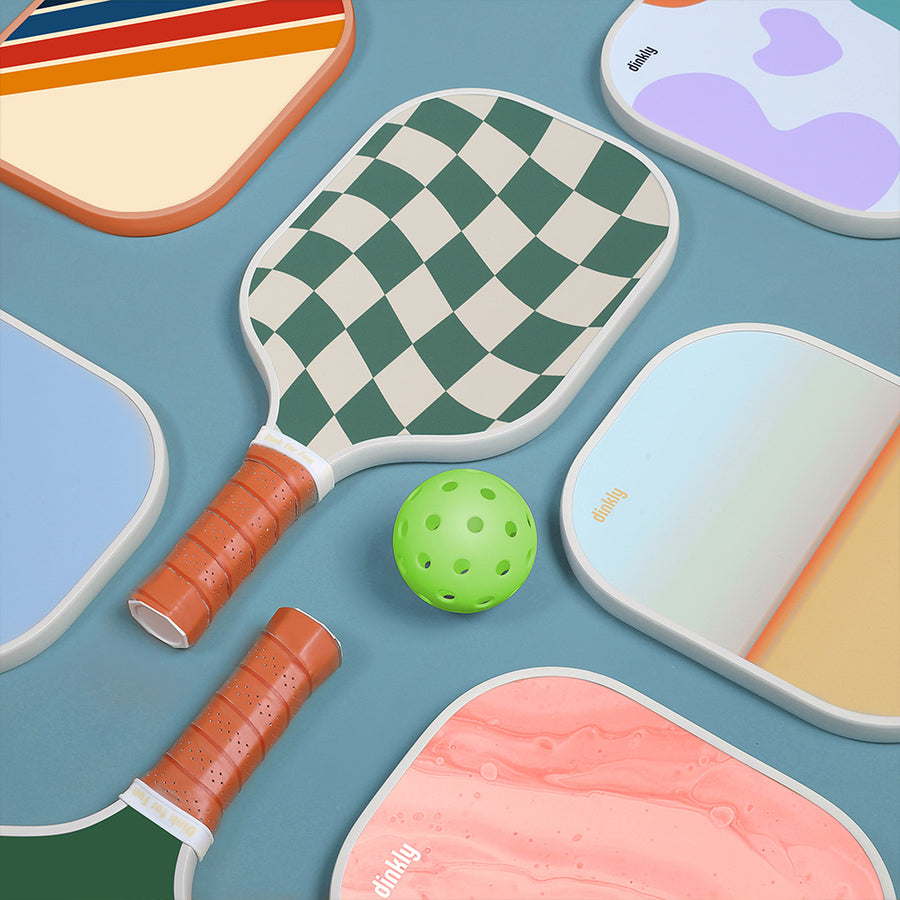
For dependable dink control, the Dinkly Beginner Paddles Collection features lightweight polymer honeycomb cores with forgiving sweet spots, letting you focus on footwork and court positioning instead of gear errors.
To compare paddle weights, core materials, and grips, read our Complete Pickleball Paddle Buying Guide.
To master overall match strategy and kitchen fundamentals, check out our How to Play Pickleball Article.
9.Frequently Asked Questions(FAQ)
Q1: What is the kitchen in pickleball?
The kitchen is the official 7-foot by 20-foot Non-Volley Zone (NVZ) located on both sides of the net. Its purpose is to prevent aggressive close-range spiking and promote tactical, finesse-based gameplay.
Q2: Can you stand in the kitchen in pickleball?
Yes. You can legally stand inside the kitchen at any point during a rally. However, if an opponent hits the ball toward you, you must let it bounce before hitting it.
Q3: Can you volley in the kitchen in pickleball?
No. You cannot hit the ball out of the air while standing in, jumping from, or touching any part of the kitchen or its lines.
Q4: Can a pickleball serve land in the kitchen?
No. A legal serve must clear the kitchen and its boundary lines completely. If a serve touches the kitchen surface or the kitchen line, it is an automatic service fault.
Q5: What happens if your momentum carries you into the kitchen after a volley?
It is an immediate fault. Even if you struck the ball while completely behind the line, your volley motion is not complete until your momentum has stopped. Stumbling or touching the line after hitting a winner forfeits the point.
Q6: What paddle should a beginner use?
Beginners should use a lightweight paddle (7.5–8.0 oz) with a wide body, forgiving sweet spot, and a polymer honeycomb core (such as the Dinkly Beginner Series) to maximize touch control around the kitchen line.
Master the Kitchen with Confidence
The non-volley zone may seem tricky during your first few games, but the golden rule never changes: let it bounce if you are in the kitchen, and stay behind the line when hitting out of the air.
By building solid footwork habits and equipping yourself with forgiving gear from the Dinkly Beginner Paddles Collection, you'll navigate the net with confidence. Dive deeper into paddle selection with our Complete Pickleball Paddle Buying Guide and level up your overall game with our How to Play Pickleball Article.
Leave a comment