

How to Play Pickleball – A Complete Beginner Guide

Image source:https://bigleagueshirts.com/blogs/resources/what-is-pickleball?srsltid=AU7gw4UwxmLl3clqLQEhXRlEDBpK4OV1k7oGsUNZVGJIy8eKkwKl9Oxj
Pickleball is one of the fastest-growing sports in the world, taking community parks, local gyms, and driveways across the country by storm. If you are brand new to the game, stepping onto the court for the first time can feel a little intimidating with terms like "the kitchen," "two-bounce rule," and three-digit scores flying around. But here is the good news: pickleball is incredibly easy and quick to pick up. Whether you are playing recreationally with family on the weekend or getting ready for your first local round-robin, this guide will walk you through the basics of how to play pickleball — from rules and scoring to serving and court setup — so you can step onto the court with total confidence.
What Is Pickleball?
Pickleball is an accessible, dynamic paddle sport that blends the hand-eye coordination of ping-pong, the footwork of badminton, and the strategy of tennis. It can be played indoors or outdoors by people of all ages and fitness levels.
How Is Pickleball Different from Tennis & Badminton?
While it borrows elements from both, pickleball plays very differently from traditional racquet sports:
Court Size: A pickleball court is significantly smaller than a tennis court (the exact same dimensions as a doubles badminton court), reducing sprint distances and knee strain.
Ball & Paddle: Instead of stringed racquets and heavy pressurized tennis balls, players use solid-face paddles and a lightweight, perforated plastic ball (similar to a wiffle ball).
Gameplay Dynamics: Tennis relies heavily on overhead smashes, baseline power, and running down balls. Pickleball, on the other hand, emphasizes touch, soft reset shots ("dinks"), court positioning, and patience.

Court Setup & Equipment
Before learning the swing, it helps to understand the boundaries and the gear required for a standard game.
Pickleball Court Dimensions
An official pickleball court measures 20 feet wide by 44 feet long, identical for both singles and doubles play. The net hangs at 36 inches high at the sidelines and drops to 34 inches at the center.
Essential Gear — Paddles, Balls & Net
To play a standard game, you only need three core pieces of equipment:
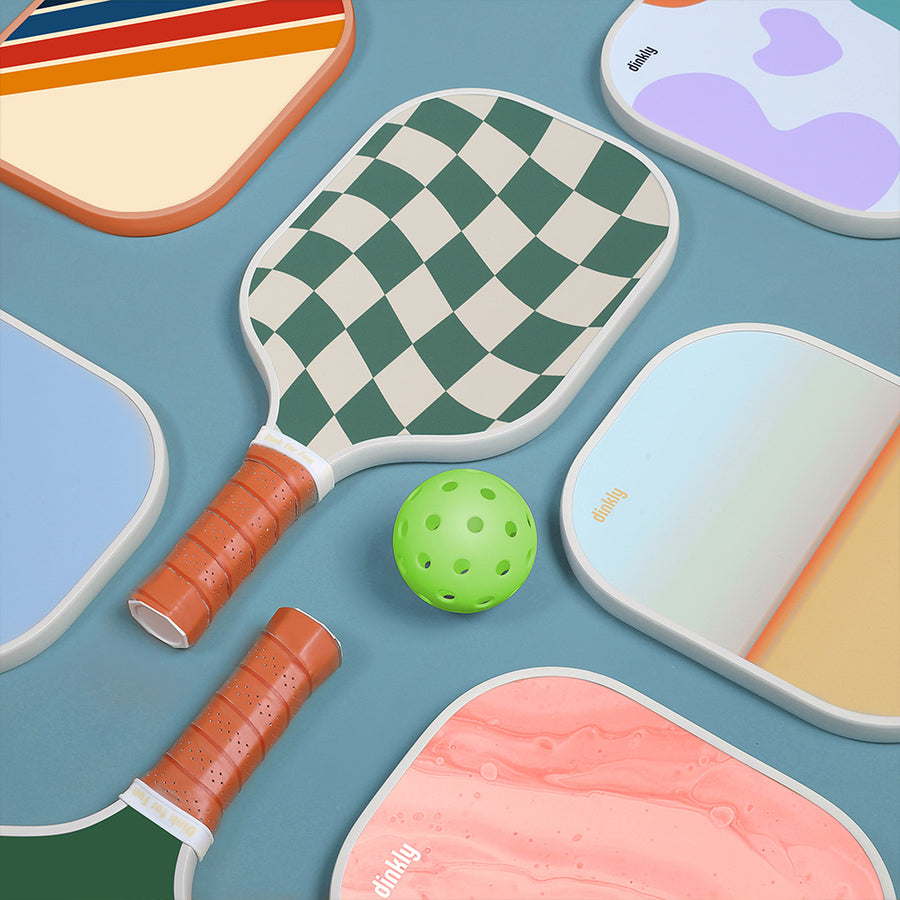
Pickleball Paddle: Beginner pickleball paddles use composite, fiberglass, or raw carbon fiber surfaces with honeycomb polymer or foam cores for better vibration dampening and control.
Pickleball ball:
Indoor Balls: Feature 26 larger holes; softer and lighter to promote longer rallies on indoor gym surfaces.
Outdoor Balls: Feature 40 smaller, precision-drilled holes; denser and slightly heavier to resist crosswinds on outdoor asphalt or concrete courts.
Net & Court Shoes: While public parks often feature dedicated nets, portable systems allow you to convert a driveway in minutes. Always pair your gear with dedicated court shoes rather than running shoes to ensure proper lateral ankle support.
3. Basic Rules of Pickleball
Here are the 8 fundamental rules every beginner needs to understand before hitting the baseline:
Singles and Doubles
Pickleball can be played as singles (1-on-1) or doubles (2-on-2). The court dimensions remain identical for both. Doubles is by far the most popular format because it emphasizes communication, quick reflex battles, and accessible movement.
Serving Rules
Every rally starts with an underhand serve:
Paddle Motion: The upward stroke must be made with an underhand motion, and paddle contact with the ball must take place below your navel (waist level).
Foot Position: Both feet must stay behind the baseline until the paddle strikes the ball.
Trajectory: The serve must travel diagonally crosscourt into the opponent’s designated service box, clearing the net and completely clearing the 7-foot kitchen line (landing on the kitchen line is a fault).
One Serve Attempt
Unlike tennis, where you get two chances, pickleball allows only one serve attempt per server. If your serve lands out of bounds, hits the net without landing in the correct box, or touches the kitchen zone, it is an immediate fault.
Service Sequence
In doubles, both players on each team get an opportunity to serve before the ball is turned over to the opposing team (known as a "side out"). The only exception is the very first turn of the game, where the starting team receives only one service opportunity to eliminate an unfair opening advantage.
Scoring Points (Side-Out Scoring)
In traditional pickleball, only the serving side can score points. Winning a rally as the receiving team earns serve, not points. Standard pickleball games reach 11 points (win by 2), while tournaments use 15 or 21-point scoring.
The Two-Bounce Rule
After the serve, the receiving team must let the ball bounce once before returning. The serving team must also allow the return to bounce once for the third shot. After these two bounces, players may volley or hit groundstrokes, stopping the serving side from rushing the net for instant smashes.
Non-Volley Zone (Kitchen) Rules
You cannot hit the ball out of the air while standing in the kitchen, on the kitchen line, or letting your forward momentum carry you into the kitchen after striking a volley. Can you step into the kitchen? Yes! But only after the ball has bounced in the kitchen first. Once you hit the bounced ball, you should immediately back out of the zone to reset your defensive stance.

Image source:https://heliospickleball.com/blogs/news/pickleball-kitchen-rules-complete-guide?srsltid=AU7gw4WXTpq7UVx57VfHRQ3ke3Cy84AL5I9AYnbOQ23mI6fd9C54zowg
Common Faults
Faults end the rally and include out-of-bounds serves, net hits, premature volleys, kitchen volleys, double bounces, or touching the net or posts.
4. Recommended Gear for Beginners
Starting your pickleball journey with the wrong paddle slows skill growth. Heavy low-cost wooden paddles offer little shock absorption, complicate soft dinking and strain wrists and elbows.
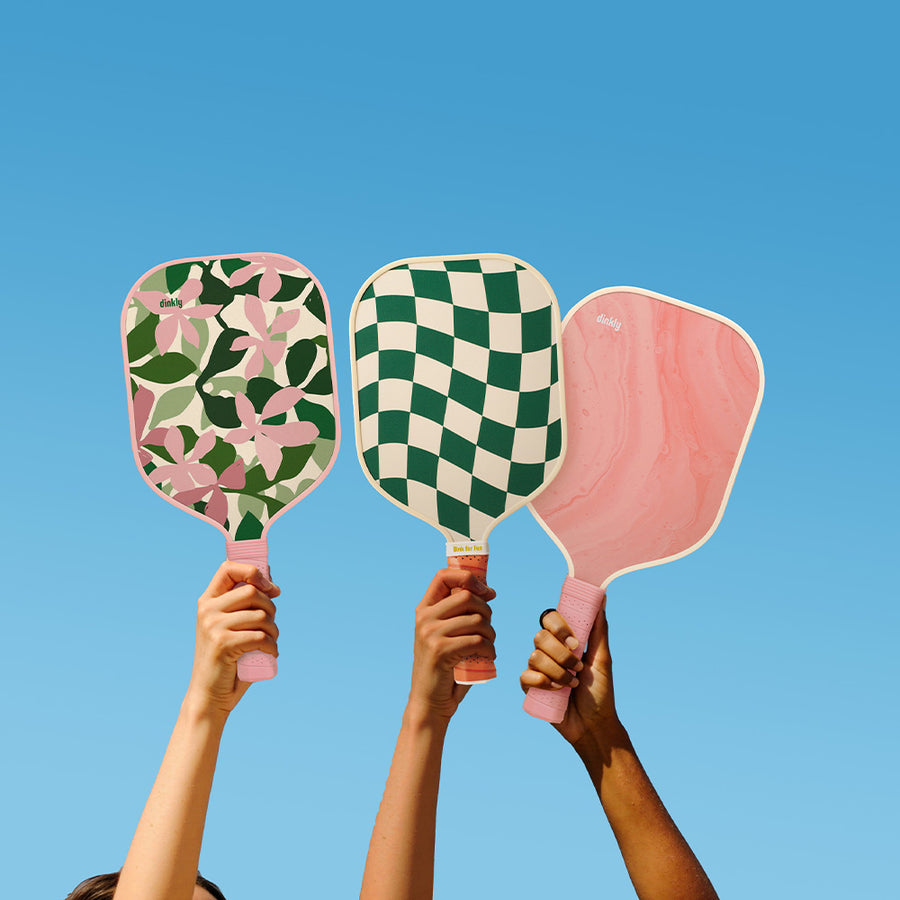
When choosing your first real setup, look for a lightweight paddle with a wide sweet spot, a forgiving polymer honeycomb core, and a balanced grip. We recommend starting with the Dinkly Beginner Paddles Collection.
The Dinkly Beginner Series is designed for players moving from beginner to intermediate levels. Its shock-dampening core and textured surface balance precise kitchen dinks and steady baseline drives.
If you are looking to compare paddle weights, grip circumferences, and surface materials, explore our Pillar: Complete Pickleball Paddle Buying Guide to find the exact match for your playing style.

5. Frequently Asked Questions (FAQ)
Q1: How do you win a game of pickleball?
Win a standard pickleball game by hitting 11 points with a minimum 2-point lead, such as 11–9 or 12–10. Tournament games may go to 15 or 21 points, yet the 2-point winning margin always remains required.
Q2: Can beginners play pickleball without prior tennis experience?
Yes! New players with no racquet sport experience often learn pickleball quicker, without needing to unlearn tennis swings. Its compact court, slower ball and underhand serve make it highly beginner-friendly.
Q3: What paddle should a beginner use?
Pick a mid-weight pickleball paddle (7.7–8.2 oz) with composite or fiberglass surface and polymer honeycomb core. It delivers a forgiving sweet spot, cuts joint vibration and supports control for dinking and serving practice.
Q4: How long does a pickleball game last?
A casual 11-point pickleball match runs 15–25 minutes. Fast and social, players usually rotate partners and play multiple games within a 1 to 2 hour session.
Conclusion
Mastering how to play pickleball comes down to understanding the court layout, respecting the kitchen line, and trusting the two-bounce rule. Once you get those foundational mechanics down, the game opens up into an addictive, fast-paced blend of strategy, exercise, and social fun.
Equip yourself with the right gear from the start to fast-track your progression. Explore the Dinkly Beginner Paddles Collection to pick up your starter setup, and dive deeper into our Complete Pickleball Paddle Buying Guide to level up your game today!
Leave a comment