

How to Hold a Pickleball Paddle – A Beginner's Guide to Grips

Holding the paddle correctly is the single most critical fundamental in pickleball. Whether you are stepping onto the court for your very first rally or aiming to tighten your consistency at the kitchen line, learning how to hold a pickleball paddle properly sets the ceiling for your entire game. The right grip provides dependable touch for delicate resets, explosive pop for drives, and vital biomechanical protection against nagging wrist and elbow injuries.
This comprehensive beginner's guide walks you through the essential pickleball grips, the intuitive "handshake" method, handle positioning, proper grip pressure, and smart adjustments between the baseline and the net.
1. Why Holding Your Paddle Correctly Matters
Control, Accuracy and Power
In pickleball, the angle of your paddle face dictates ball trajectory far more directly than in tennis because games are played at much closer quarters. An unstable or misaligned hold forces compensations throughout your arm, resulting in pop-ups and erratic mishits. A sound grip aligns your wrist with the paddle surface, translating natural arm extension into pinpoint accuracy and effortless power.
Injury Prevention and Good Habits
Recreational players frequently suffer from medial or lateral epicondylitis—commonly known as tennis or pickleball elbow—as well as wrist tendon strain. In over 80% of cases, these injuries stem from gripping the paddle with a "death grip" or using extreme wrist bends to force topspin. Establishing ergonomic grip mechanics early protects joint health and allows hours of fatigue-free play.
2. The Continental Grip: The Best Place to Start
The "Shake Hands" Method
The Continental grip is universally regarded as the default foundation for beginners. To find it effortlessly, place your paddle edge perpendicular to the ground as if chopping down like a hammer. Extend your dominant hand, slide it down the handle from the paddle face, and wrap your fingers around the grip as if shaking hands with an old friend. The "V" shape formed by your thumb and index finger should rest directly along the top bevel (Bevel 2 for right-handers, Bevel 8 for left-handers).
Neutral, Strong and Weak Variations
While standard Continental is neutral, players subtly shift their hold based on match situations:
· Neutral Continental: The paddle face remains square to the target, creating an equal balance between forehand and backhand readiness without requiring mid-rally shifts.
· Strong Continental (Slight Shift Clockwise): The palm shifts slightly toward the right bevel (for righties), gently closing the paddle face to provide added whip on forehand drives and punch volleys.
· Weak Continental (Slight Shift Counter-Clockwise): The palm shifts slightly outward, opening the paddle face naturally to aid defensive backhand slicing and low dink recoveries.
When to Use Each Variation
Neutral Continental is your go-to home base at the kitchen line where rapid exchanges require instantaneous reaction. Strong variations excel when dictating points from the mid-court transition zone, while weak variations provide extra paddle angle when digging out dipping balls around your ankles.

3. Other Pickleball Grips to Know
Eastern Forehand Grip
Achieved by placing your palm flush on the paddle face and sliding straight down to the handle. The Eastern grip positions the palm behind the paddle face, making it the most natural choice for flat drives, hard serves, and heavy baseline forehands. However, it requires a quick wrist adjustment when transitioning to backhand defense.
Western Grip
Formed by rotating your hand underneath the paddle handle, orienting the paddle face downwards toward the court. While popular among converted table tennis players seeking extreme topspin dip, the Western grip is notoriously difficult for quick backhands and low dinks at the non-volley zone line.
Backhand Grip
Often called the Eastern Backhand grip, the base knuckle of your index finger shifts to the top bevel. This provides solid structural support behind the paddle face for driving two-handed or one-handed backhand roll volleys.
Modified Eastern Grip
Sitting halfway between the Continental and full Eastern grips, the Modified Eastern gives all-court players sufficient forehand aggression while preserving quick reactive resets at the net.
4. Where to Hold the Paddle: Hand Position & Ready Stance
Hand Placement on the Handle
Handle placement is just as important as finger alignment:
· Choking Up (High on Handle): Placing your index finger near the paddle throat maximizes paddle head control, touch, and reset maneuverability during kitchen soft games.
· Holding Low (Near the Butt Cap): Positioning the heel of your palm against the butt cap extends your physical leverage, increasing swing radius and driving paddle-tip velocity on baseline serves and third-shot drops.
The Ready Position at the Baseline
When defending deep, maintain an athletic stance with feet shoulder-width apart, paddle held in front at chest height, and paddle head angled slightly upwards at 10 or 11 o'clock. This prepares your body to absorb deep incoming shots smoothly.
Adjusting at the Net
At the kitchen line, reaction windows shrink to fractions of a second. Keep your paddle raised firmly at 45 degrees in a 60/40 backhand bias, enabling immediate blocks and lightning-fast punch counters.
5. Grip Pressure & Common Mistakes
How Tight Should You Hold Your Paddle?
On a grip tension scale of 1 to 10 (where 1 is barely holding the paddle and 10 is white-knuckling with maximum force), ideal pickleball grip pressure should hover around a 3 to 4. A soft, relaxed grip acts like a shock absorber, absorbing incoming pace and dropping balls softly into the opponent's kitchen. Only tighten to a 6 or 7 at the exact split-second of impact on offensive overhead slams and putaways.
Common Grip Mistakes to Avoid
Beginners often develop bad habits that limit their ceiling. Watch out for these three pitfalls:
· White-Knuckling: Gripping at a 9 or 10 locks your wrist and forearm muscles, making soft touch shots impossible and causing elbow inflammation.
· Finger on the Paddle Face: Resting your index finger flat against the paddle face may feel stable initially, but it limits wrist articulation and exposes your finger to painful ball impacts.
· The Hammer Fist: Bunching all four fingers tightly side-by-side without spreading the index trigger finger kills fine paddle angle manipulation.
6. Recommended Paddles for Beginners
Mastering delicate grip mechanics and wrist angles requires equipment with balanced ergonomics, comfortable grips, and forgiving sweet spots. Overly stiff or heavy paddles amplify vibrations directly into your joints, forcing beginners to over-grip.
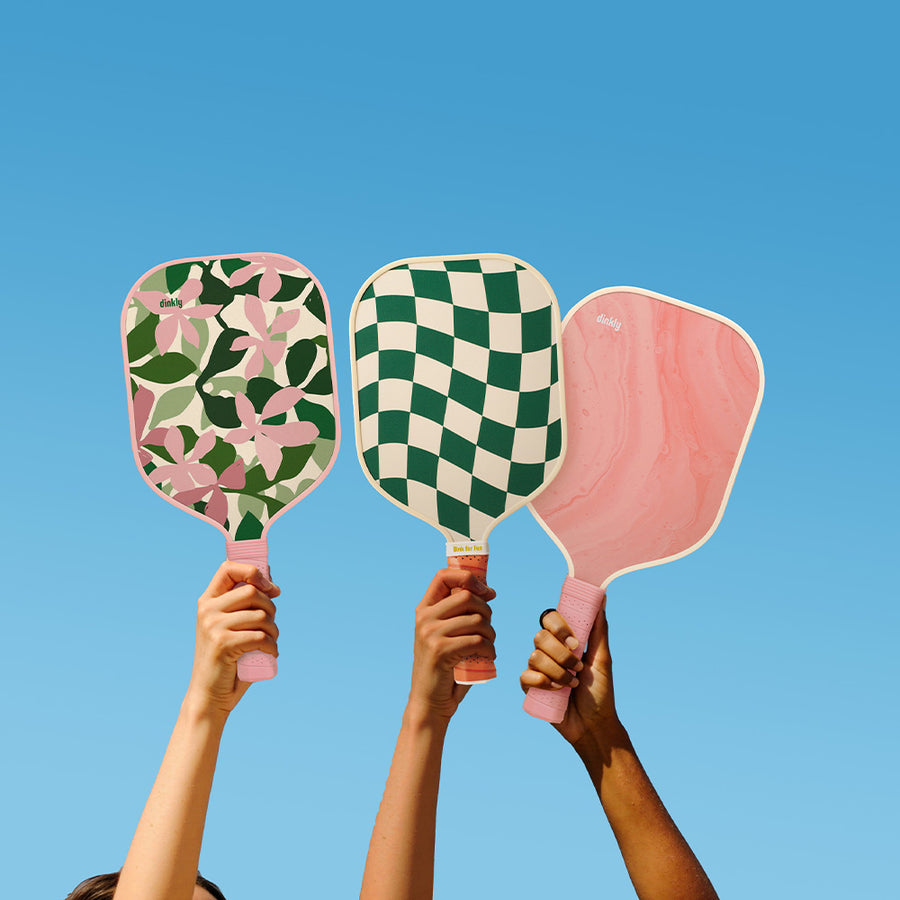
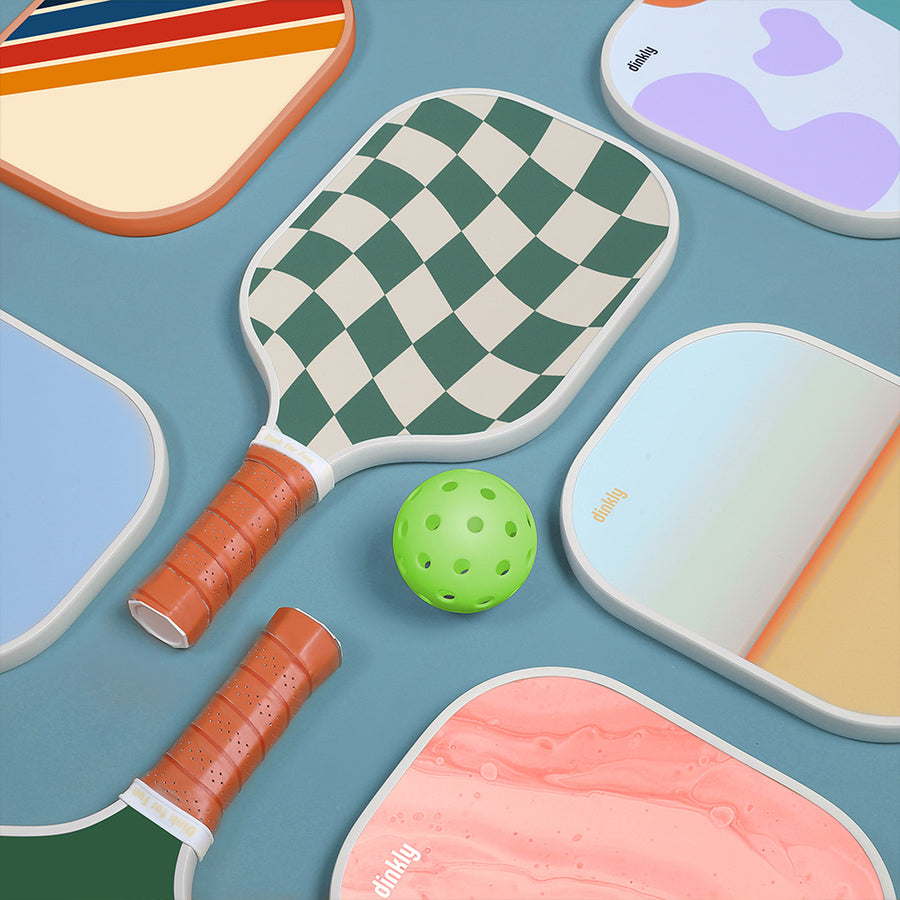
For developing players seeking effortless control and cushioned tactile feedback, the Dinkly Beginner Paddles Collection.
features lightweight polymer honeycomb cores and ergonomically contoured perforated grips. This optimal balance helps you maintain a relaxed 3-out-of-10 grip pressure while placing dinks and resets with pinpoint confidence.
7. Frequently Asked Questions (FAQ)
· What is the best pickleball grip for beginners?: The Continental grip is widely considered the best starting grip because it handles forehands, backhands, serves, and dinks seamlessly without forcing mid-point adjustments.
· Should I use the same grip for forehand and backhand?: Yes, beginners should stick with one universal grip (Continental or Modified Eastern) to develop court confidence before experimenting with grip switching.
· Do I need to switch grips during a rally?: No. At the kitchen line, rallies are too fast to rotate your grip between shots. Master a dependable neutral grip first.
· How tight should I hold my pickleball paddle?: Keep your grip relaxed at a 3 to 4 on a 1-to-10 scale. A loose grip softens touch, improves resets, and prevents elbow tendonitis.
· Do the grips work the same for left-handed players?: Yes. Left-handers use the identical handshake technique, simply referencing the opposite bevels on the paddle handle.
· How do I avoid wrist pain when holding the paddle?: Relax your grip tension, avoid flicking your wrist excessively, and choose a paddle with premium vibration dampening like Dinkly's beginner line.
Conclusion: Start with the Basics and Build Confidence
Learning how to hold a pickleball paddle correctly lays the groundwork for every successful shot you hit on the court. Begin with the dependable Continental handshake grip, maintain a relaxed 3-to-4 pressure, keep your index finger slightly separated like a trigger, and keep your paddle raised and ready out in front.
Ready to master your all-around match mechanics? Explore court positioning and rules in our How to Play Pickleball Article.
compare core specs and handle dimensions in our Complete Pickleball Paddle Buying Guide.
and discover forgiving, player-tested paddles across the Dinkly Beginner Paddles Collection.
Leave a comment