

How to Clean a Pickleball Paddle Without Damaging It

To clean a pickleball paddle safely, use a clean microfiber cloth lightly dampened with plain water, wipe gently, and dry it fully before storage. Do not soak the paddle or reach for solvents, abrasive pads, household erasers, or a carbon-fiber cleaning block unless the maker approves that product for your exact face material. Cleaning removes residue; it does not repair wear or structural damage.
Start with the lowest-risk cleaning kit
You need less than most shopping lists suggest: one clean microfiber cloth, plain water, a dry towel and a well-lit surface for inspection. The cloth should be free of oil, polish and leftover household cleaner. Dampen it; do not saturate it or spray liquid directly onto the paddle.
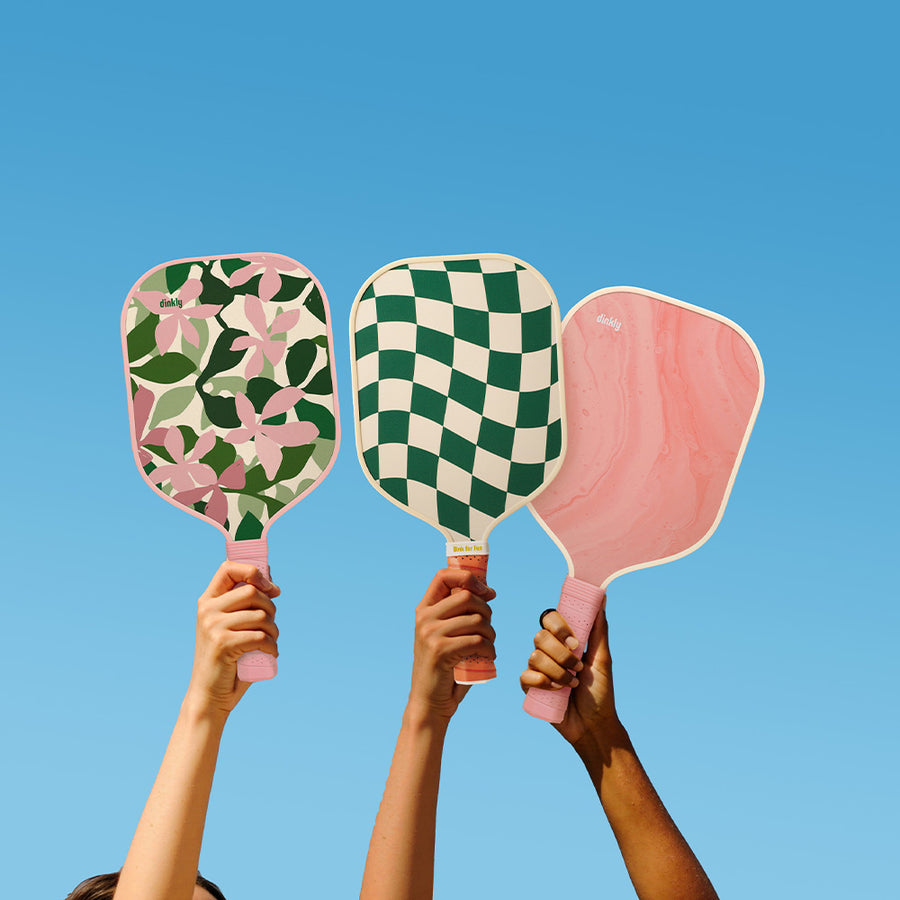
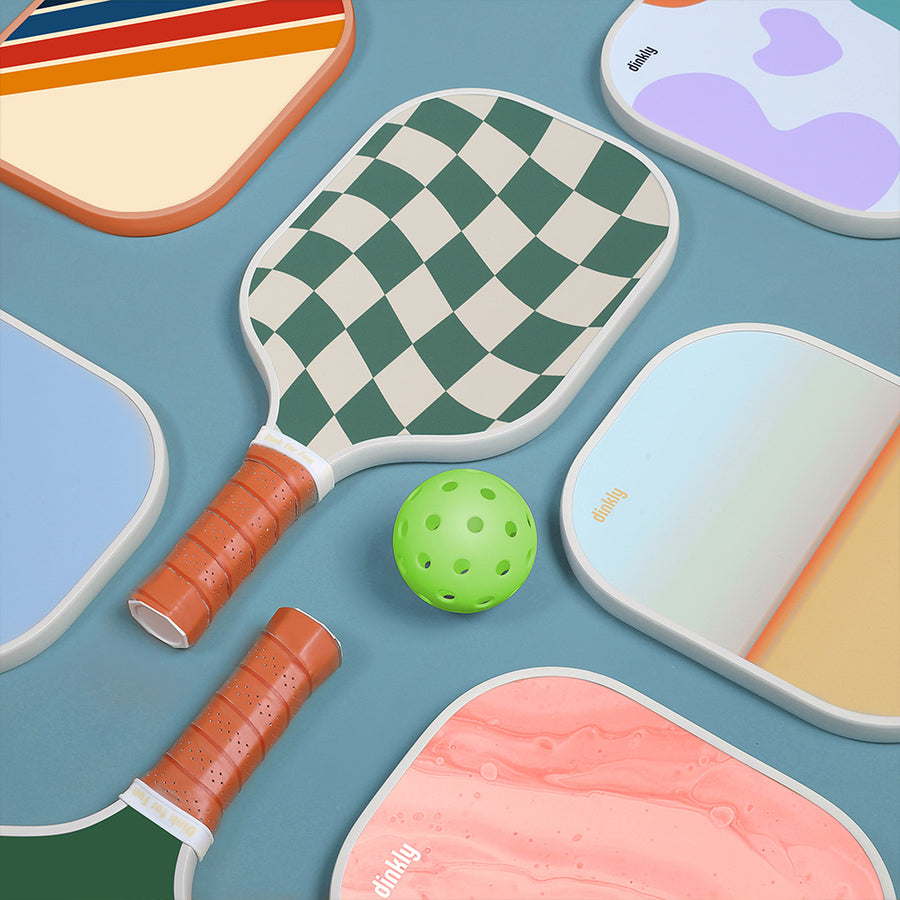
This conservative default matters because paddle faces are not interchangeable. Raw carbon, fiberglass, painted faces, applied graphics and proprietary coatings can respond differently to the same tool. The current Dinkly Play listing, for example, identifies a fiberglass surface and a 16 mm polypropylene honeycomb core, but Dinkly does not currently publish a model-specific cleaning protocol. That means a carbon-fiber block should not be assumed safe for it.

How to clean a pickleball paddle in four steps
- Inspect before adding moisture. Look along both faces, the edge guard, throat and handle. If you see a crack, lifted layer, moving edge guard or loose handle, stop. Cleaning is not the next step.
- Remove loose debris while dry. Use the dry part of the cloth to lift dust or grit. Do not scrape the face with a fingernail, brush or hard tool.
- Wipe with light moisture and light pressure. Dampen a clean section with plain water. Work in short passes across the face, then the edge guard. Avoid flooding seams.
- Dry completely. Use a separate towel, leave the paddle in a ventilated indoor area, and put it away only when the face, edge and grip are dry.

Several paddle makers converge on this gentle baseline. Selkirk's paddle care guide describes water and a lint-free cloth for general cleaning, while Paddletek's care article warns against household cleaners, solvents and abrasive scrubbers. Those sources inform the cautious method; their branded products and warranty statements do not transfer to Dinkly.
Match any deeper-cleaning tool to the exact surface
Carbon cleaning blocks are a good example of why material matters. CRBN markets its paddle eraser for carbon-faced or similar peel-ply surfaces and includes a caveat for aftermarket coatings. That is a product-specific use case—not permission to rub the same block over fiberglass, paint, graphics or every textured face.
The same rule applies to soap, alcohol wipes and specialty sprays: first identify the exact surface, then find the exact maker's instructions. If those instructions are absent, stop after the low-risk water-and-cloth method and ask the maker. USA Pickleball's equipment standards regulate paddle surface characteristics and alterations. A care routine should remove contamination, not intentionally change texture.
| Area or condition | Low-risk first action | Pause when… |
|---|---|---|
| Ordinary ball marks or dust | Dry microfiber, then a lightly damp section. | Marks need hard scrubbing or a solvent. |
| Raw-carbon or peel-ply face | Follow that model maker's instructions. | You cannot confirm the face material or approved block. |
| Fiberglass, painted or graphic face | Plain water and very light pressure. | A product is labeled only for carbon surfaces. |
| Edge guard and throat | Wipe the exterior; dry the seams. | The guard lifts, shifts or exposes a gap. |
| Grip or overgrip | Blot/wipe lightly and dry fully. | It twists, tears, stays slick or exposes the handle. |
Clean the face, edge and grip as three different zones
Face: support the paddle on a soft towel and use minimal pressure. A cleaner-looking face is the goal; do not chase every cosmetic mark. Edge and throat: wipe outward rather than pushing moisture into seams. Check that the guard is secure. Grip: use a separate clean section of cloth so face residue is not transferred to the handle. Dry it in open air before returning it to a bag.

A grip that stays slick, compressed or torn may be a grip-maintenance issue rather than a reason to discard the whole paddle. Use only a compatible replacement grip or overgrip and follow its instructions.
Five cleaning mistakes that create more uncertainty
- Submerging or rinsing the paddle: it gives liquid more opportunity to enter seams and makes complete drying harder.
- Spraying the paddle directly: overspray can collect around the edge guard, throat or grip.
- Using a Magic Eraser or abrasive sponge: abrasion can alter a finish even when the surface looks cleaner.
- Assuming a carbon block is universal: a tool made for raw carbon is not automatically suitable for a fiberglass or coated face.
- Promising a performance reset: residue can be removed, but cleaning cannot rebuild worn texture, re-bond a layer or repair a damaged core.

Know when cleaning is not enough
After the paddle is clean and dry, look and listen again. A crack, lifted face, loose handle, shifting edge guard, sharp exposed material or a new internal rattle deserves a stop-and-assess response. If the problem is a vague change in feel, retest with a familiar ball, court and drill before blaming the paddle.
Use the companion paddle replacement checklist to separate cosmetic wear from structural signs. For questions about a Dinkly item, send the exact model, order information and clear photos through the Dinkly contact page; do not assume a care method or coverage that is not published.
If inspection shows you genuinely need another everyday paddle, review the current Dinkly Play listing and its live options. Maintenance comes first; replacement is the next decision only when the evidence supports it.
Frequently asked questions
What is the safest way to clean a pickleball paddle?
Start with a clean microfiber cloth lightly dampened with plain water. Wipe gently, keep liquid away from openings and seams, then dry the face, edge and handle fully before storage.
Can I use a Magic Eraser on a pickleball paddle?
Do not use a household melamine eraser by default. It is mildly abrasive and may change a finish or graphic. Use only a product and method the maker approves for your exact paddle surface.
Can I use a carbon-fiber cleaning block on every paddle?
No. Cleaning blocks are marketed for specific raw-carbon or peel-ply surfaces. They are not a universal choice for fiberglass, painted, coated or customized faces.
Should I clean my pickleball paddle after every game?
Inspect it after play and wipe away visible residue when needed. There is no universal schedule; court conditions, use and the paddle maker's instructions should guide frequency.
Can cleaning restore a worn pickleball paddle?
Cleaning can remove surface residue, but it cannot reverse a crack, loose component, worn finish or internal damage. If a change remains after a gentle clean and controlled retest, inspect further or contact support.
Prepared by DinklyPickleball; evidence checked October 4, 2026. Current Dinkly product media and specifications were checked in Shopify. Official and manufacturer references are linked in context; brand-specific care and warranty statements are not treated as Dinkly policy.
Leave a comment